Real-time digital twin for wall thickness intelligence
Rebuild every pipe in real time across its full length and circumference
Talk to an expertGet the digital twin advantage
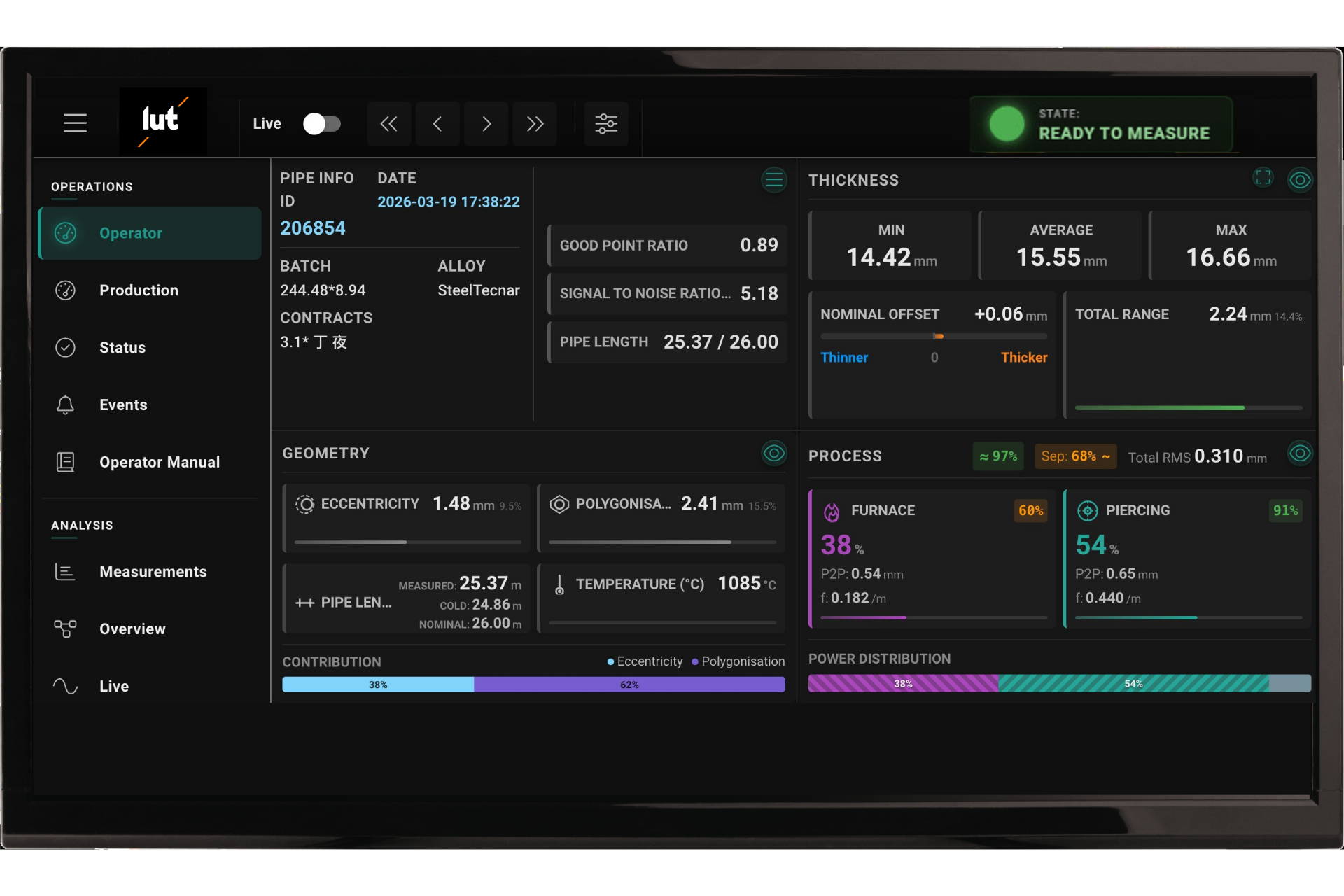
The Lut 3.0 Digital Twin builds a complete, real-time replica of every pipe using high-resolution measurements taken along its length and across its circumference. It separates and analyzes each source of variation—whether from temperature, piercing, or forming—so nothing is hidden.
This full reconstruction provides highly reliable measurements of minimum, average, and maximum wall thickness across the entire pipe, helping you better understand and control your production.
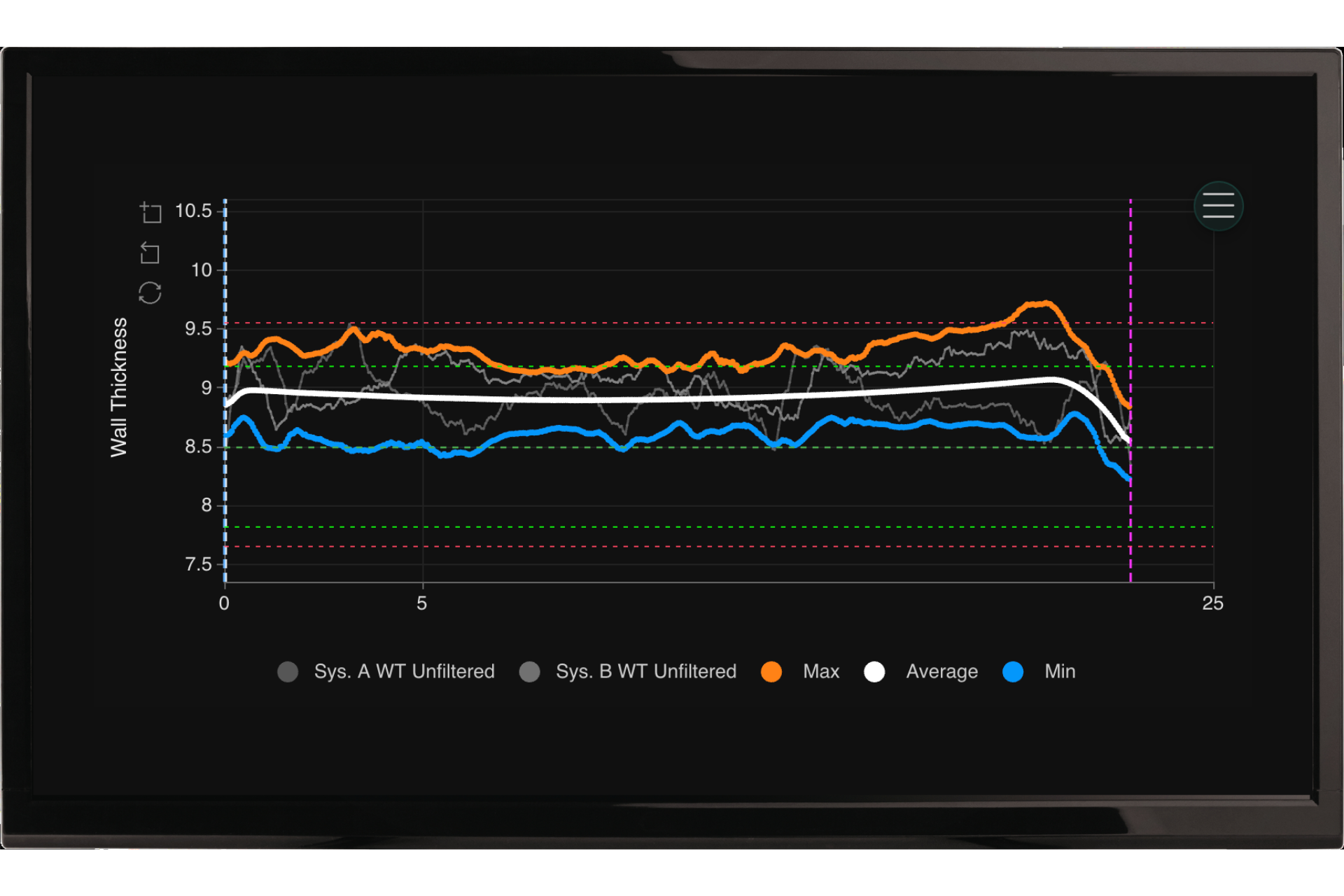
True minimum, maximum and average wall thickness profiles
Accurately measure true minimum, maximum and average wall thickness across the entire length of the tube to reduce rejects, minimize safety margins, and optimize usable length.
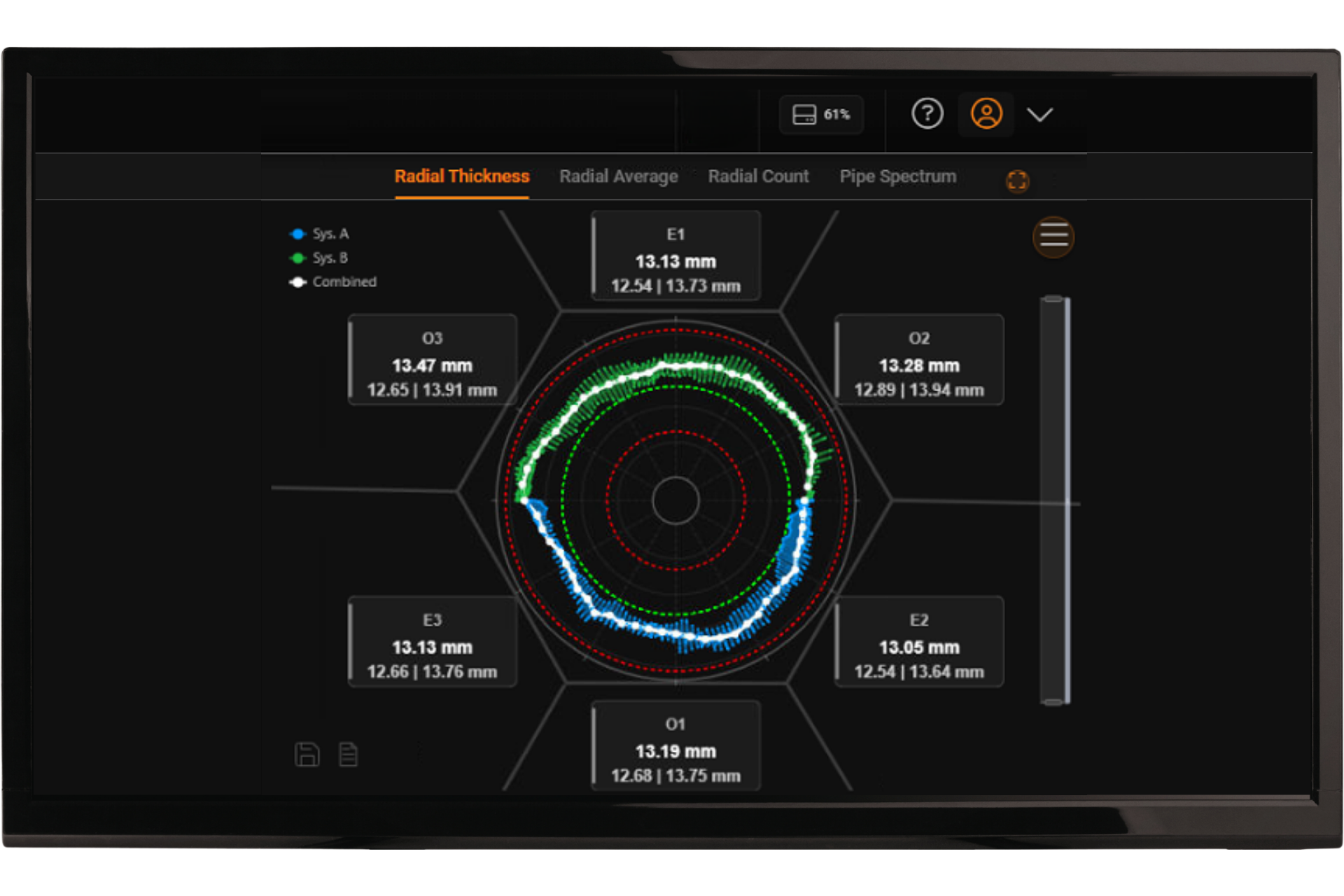
Instantly visualize polygonization
Elongation mills generate repeatable patterns along the pipe, commonly referred to as polygonization.
With hundreds of high-speed measurements taken around the circumference, the LUT isolates these patterns from other sources of variation.
In a polar view, the footprint of each stand or roll is immediately visible, enabling fast identification of imbalances without complex analysis.
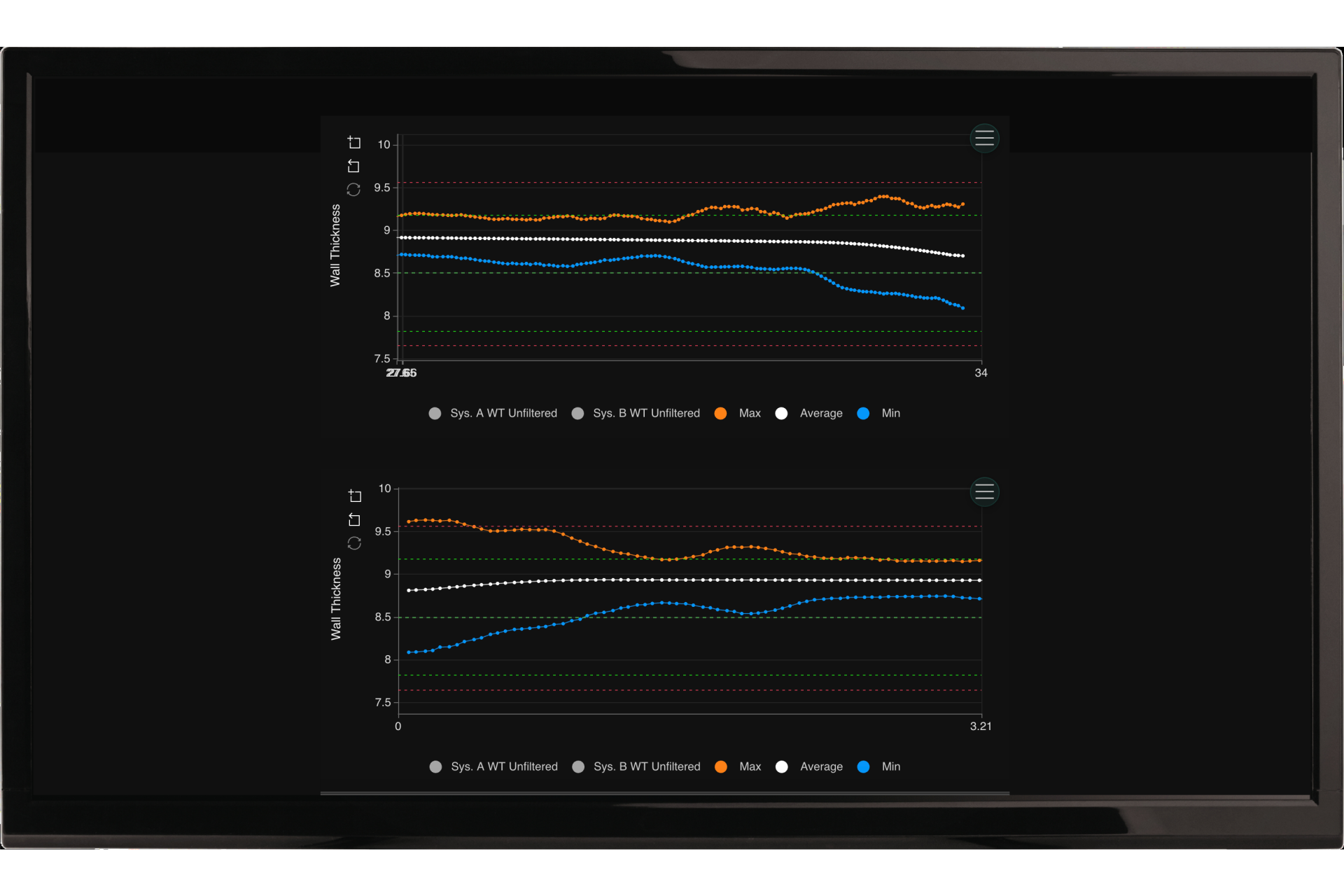
Optimize head and tail cutting with true geometry
The Lut 3.0 digital twin accurately reconstructs the head and tail of every pipe, isolating them from wall variations in the body. This allows operators to precisely identify where thickness remains within tolerance.
Using true minimum and maximum profiles, operators can confidently define optimal cut positions, avoiding sections that are too thin or too thick while minimizing material loss.
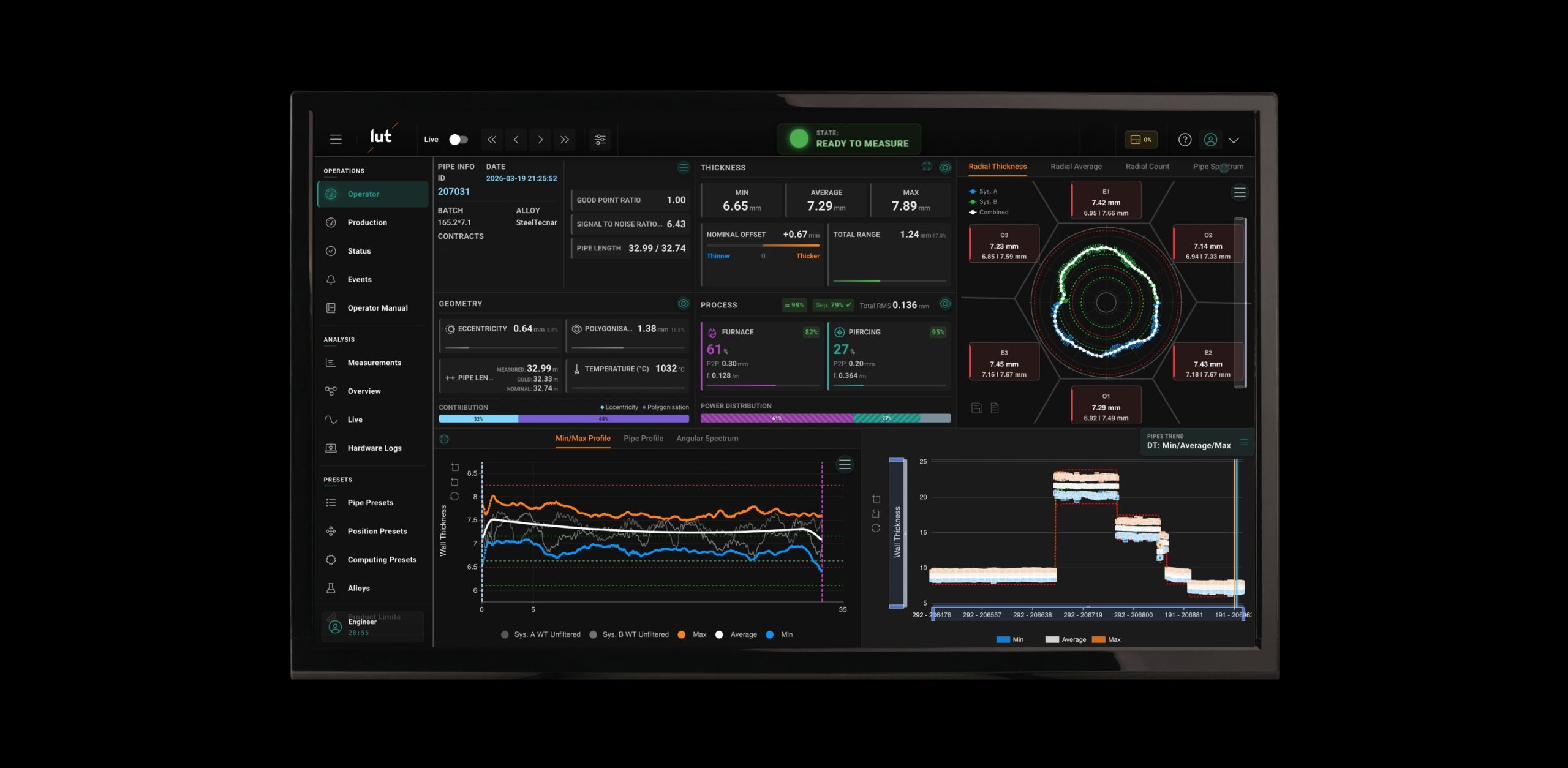
Understand the true sources of wall thickness variation
With high-frequency measurements along the length of the pipe and hundreds of points around its circumference, the Lut digital twin precisely separates the various sources of wall thickness variation.
It clearly distinguishes what comes from the elongation mill, the piercing process, or uneven billet temperature, quantifying the contribution of each. This gives operators a clear, actionable understanding of their process, enabling faster decisions and better control of product quality.
Ready to increase plant yield by 5%
Contact us to learn how to leverage the data from the Lut 3.0 and get a return on your investment in less than 2 years.